
Tel: 403.259.0005
Tel: 403.259.0005
10 Types of Heavy Iron Construction Equipment and Their Uses

Construction and infrastructure are two of the most demanding industries in the world. The work produced by these industries shapes a lot, from city skylines to highways and homes.
Behind every large-scale project, there’s a fleet of heavy iron construction equipment handling the work that human labour alone cannot: moving thousands of tons of material, breaking through hard ground, grading land with precision, and lifting loads that would otherwise take weeks to manage manually.
Heavy iron equipment covers a broad category of machines built for serious, high-output work. They are purpose-engineered machines designed to operate under extreme conditions, across long shifts, & on terrain that would stop smaller equipment entirely.
For contractors, fleet managers, & project owners, knowing the types of machines available & what each one is built to do makes all the difference when it comes to equipment decisions. In this blog, we cover 10 types of heavy iron construction equipment and break down exactly what each machine is used for.
1. Excavators

Excavators are among the most widely used heavy iron machines you’ll find on any large construction site. Built for heavy-duty digging, these machines are designed to handle volume and depth that literally no other equipment in their class can match.
However, ground conditions on large projects rarely stay consistent. Having a machine that adapts to those changes without being replaced is what makes excavators a long-term fixture on serious construction and infrastructure work. Alberta’s construction and infrastructure sector runs on heavy iron, and excavators sit at the centre of that demand. Contractors looking to lease excavators in Alberta or find an excavator for sale in Alberta will find no shortage of options, but knowing exactly what the machine needs to handle on-site is what drives the right decision.
Use Cases:
- Digging foundations & trenches for large-scale construction projects
- Dredging rivers, lakes, & water bodies for flood control or navigation
- Mining & quarrying operations requiring deep earth removal
- Demolition work using hydraulic breakers & shear attachments
- Tunnelling & underground construction
- Rock breaking on sites with hard or compacted ground
- Pipe & utility line installation requiring precise trenching
2. Skid Steers

Skid steers are one of the most practical machines you’ll find on a construction site. This is particularly true where space is tight and manoeuvrability is required. Their compact frame and tight turning radius are what make them genuinely useful in urban sites, indoor demolitions, and confined job sites where larger machines simply cannot operate.
What keeps skid steers in constant demand is their attachment versatility. Buckets, augers, trenchers, brooms, and pallet forks are just a few of the tools that can be swapped in depending on the task. One machine covers a wide range of work without needing additional equipment on site.
For contractors across Alberta, skid steer rental in Calgary is a practical route for short-term projects or sites where owning a dedicated unit doesn’t make financial sense.
Use Cases:
- Material handling & loading in confined or urban job sites
- Trenching & digging with auger or trencher attachments
- Site cleanup & debris removal
- Snow removal in commercial & industrial spaces
- Grading & levelling on smaller sites
- Demolition assistance in tight interior spaces
- Landscaping & land clearing on residential & commercial projects
3. Dozer

Dozers are one of the most powerful machines you’ll find on any large construction or infrastructure project. These machines are built to move massive quantities of soil, rock, debris, and other materials across a site using a wide front-mounted steel blade.
What separates a dozer from other earthmoving equipment is its raw pushing power and the ability to work across terrain that would stop most other machines entirely. Road construction, land clearing, and large-scale earthmoving are where dozers earn their place.
The terrain on these projects is rarely forgiving, and that is exactly the kind of ground dozers are built for. Steel tracks keep the machine stable and moving regardless of what is underneath it.
Use Cases:
- Land clearing on large construction and infrastructure sites
- Road building and highway construction
- Grading and levelling terrain before construction begins
- Pushing and stockpiling bulk materials like soil, rock, and debris
- Reclamation work on mining and industrial sites
- Demolition support on large clearance projects
- Earthmoving in mining, quarrying, and excavation operations
4. Graders

Where a dozer moves material in bulk, a grader refines what’s left behind, turning rough, uneven ground into a flat and accurately graded surface. A long adjustable blade mounted between the front and rear axles is what gives graders their accuracy, allowing operators to control the angle, depth, and direction of the cut with a level of precision that no other earthmoving machine can replicate.
Road construction is where graders do their most visible work, but their role extends well beyond that. For contractors and project owners looking at heavy equipment for sale in Alberta, a grader is a long-term investment that pays for itself on any project where surface accuracy is non-negotiable.
Use Cases:
- Road construction and highway base preparation
- Airport runway and taxiway grading
- Land levelling on large construction and infrastructure sites
- Snow removal on highways and large commercial properties
- Fine grading after bulldozing on earthmoving projects
- Maintaining unpaved roads and work site access roads
- Surface preparation for large residential and commercial developments
5. Articulated Trucks

Articulated trucks are built for one thing: moving massive quantities of soil, rock, and debris across terrain that would stop most other hauling equipment. Rough ground, steep grades, and tight turns are exactly the conditions these machines are designed for, not the conditions they struggle with.
For contractors managing large projects, the decision between owning and leasing comes down to project length and frequency of use. Those looking to lease used construction equipment in Alberta will find articulated trucks among the most practical options, particularly for projects where heavy hauling is needed for a defined period.
Use Cases:
- Bulk material hauling on mining and quarrying sites
- Earthmoving and soil transportation on large infrastructure projects
- Hauling rock, debris, and aggregates across rough or uneven terrain
- Forestry operations requiring heavy load transport
- Large-scale road and highway construction
- Waste management and land reclamation projects
- Disaster response and emergency earthmoving operations
6. Compactors
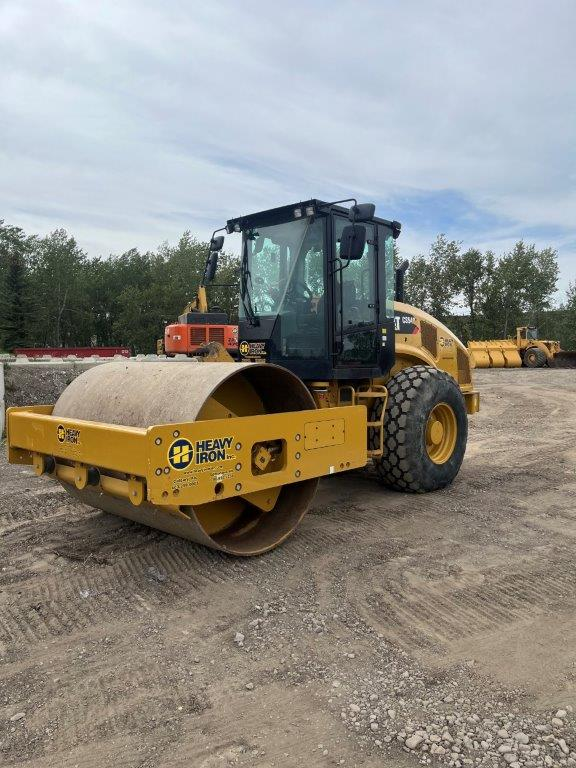
Compactors are one of those machines that don’t get as much attention as the equipment working around them, but no serious construction project moves forward without them. They are built to compress soil, asphalt, and other materials into a dense, stable surface that can actually support the work being built on top of it.
There are different types of compactors built for different applications. Knowing which type the project needs is just as important as having one on site.
For contractors looking at heavy equipment for sale in Alberta, compactors are a long-term investment that pays off across multiple projects. Those managing shorter timelines will find that leasing used construction equipment in Alberta is a practical way to get the right compactor on site without the overhead of ownership.
Use Cases:
- Soil compaction on earthmoving and foundation projects
- Asphalt compaction on road construction and resurfacing work
- Compacting backfill in trenches and utility installations
- Preparing subbase layers for roads, parking lots, and pavements
- Compaction work on large residential and commercial developments
- Landfill compaction on waste management sites
- Compacting aggregate materials on mining and quarrying sites
7. Wheel Loaders

Wheel loaders are similar to backhoe loaders but without the rear digging arm. What they trade in versatility, they make up for in raw material handling power. The front bucket on a wheel loader is significantly larger, making these machines the go-to choice on sites where moving heavy materials quickly is the priority.
Running on tires rather than tracks means wheel loaders cover ground faster and move between tasks without the slowdown that tracked equipment brings. On busy construction, mining, and quarrying sites, speed and capacity are what keep them in constant demand.
Use Cases:
- Loading and transporting bulk materials like soil, sand, and aggregates
- Stockpiling materials on construction and mining sites
- Loading dump trucks and articulated trucks for hauling operations
- Site cleanup and debris removal
- Snow removal on large commercial and industrial properties
- Material handling in quarrying and mining operations
- Feeding material into crushers, screens, and processing equipment
8. FYREBX

FYREBX is a skid steer and track loader attachment built specifically for firefighting, dust control, and water-based site work. It mounts to any compact track loader attachment plate and carries up to 500 gallons of water on board, which means it operates independently without relying on an external water source. That self-contained capability is what makes it genuinely useful in remote or fast-moving situations where setting up a water supply is not practical.
The FYREBX is not a single-use machine. It handles firefighting, retardant foam application, hydro seeding, road work, and dust control, depending on the nozzle configuration and attachment setup. For operations across Alberta where wildfire risk, dust management, and remote site work are real day-to-day concerns, it covers a range of tasks that would otherwise require separate equipment.
Use Cases:
- Wildfire suppression and controlled burn support
- Dust control on construction, mining, and industrial sites
- Hydro seeding on reclamation and landscaping projects
- Road work and surface water application
- Remote site firefighting where an external water supply is unavailable
- Retardant foam application on high-risk sites
- Water distribution in agricultural and forestry operations
9. Attachments

Attachments are what turn a single machine into a multi-purpose workhorse on a construction site.
A skid steer or excavator without attachments covers one job. With the right attachment, that same machine handles digging, grading, lifting, cutting, and material handling without bringing additional equipment on site. This flexibility directly reduces the costs and keeps the project moving without the delays that come with sourcing and mobilizing multiple machines.
Choosing the right attachment comes down to knowing what the job actually needs.
Use Cases:
- Digging and trenching with excavator buckets and V buckets
- Coupling and attachment changes with manual and hydraulic couplers
- Material handling and sorting with grapple attachments
- Demolition and rock breaking with hydraulic breakers
- Grading and levelling with blade attachments
- Lifting and placing materials with fork attachments
- Site cleanup and debris management with sweeper and bucket attachments
10. Miscellaneous

Not every piece of equipment on a construction site or industrial site fits neatly into a single category, but that does not make it any less important to the work.
Telehandlers, zoom booms, enclosed trailers, and specialized lifting equipment all fill gaps that standard heavy iron cannot. These machines handle access, lifting, transport, and storage roles that keep a project organized and operational from start to finish.
For contractors and project owners across Alberta, having access to this kind of equipment without committing to full ownership is where the miscellaneous equipment category becomes genuinely practical. Those gaps are more common than most project timelines account for, and knowing where to source the right piece of equipment quickly is what keeps a project on schedule.
Use Cases:
- Heavy lifting and material placement with telehandlers and zoom booms
- Elevated access work on construction and infrastructure sites
- Equipment and material transport between job sites with enclosed trailers
- On-site storage and organisation with purpose-built trailer setups
- Specialized lifting operations requiring high capacity and outrigger stability
- Supporting primary equipment on large multi-phase construction projects
- Bridging equipment gaps on sites where standard heavy iron falls short
Whether it’s a telehandler, a zoom boom, or a heavy-duty enclosed trailer, Heavy Iron Inc. has the inventory to cover those gaps quickly and without the overhead of ownership.
Conclusion
Heavy iron construction equipment is not a one-size-fits-all investment. Every machine on this list serves a specific purpose, and the projects that run most efficiently are the ones where the right equipment is matched to the right job from the start. Whether it’s an excavator breaking ground on a large infrastructure project, a dozer clearing land for a new development, or a compactor finishing a road base, each machine plays a role that the others simply cannot fill.
For contractors across Alberta, the decision between buying and leasing also comes down to what the project actually demands. Those looking to lease backhoes for shorter-term site work will find it a far more practical route than committing to ownership for a machine that may only be needed for a defined period. The same logic applies across the entire equipment lineup.
If you are looking for heavy iron that is ready to work, Heavy Iron Inc. carries a wide range of used construction equipment across Alberta. Browse the inventory and find the machine your next project needs.
Frequently Asked Questions (FAQs)
Q1: Do operators need specific certifications to run heavy iron equipment in Alberta?
Yes. Certain types of heavy equipment in Alberta require trained and certified operators, depending on the machine and job site requirements.
Q2: How much do ground conditions affect which machine you should bring on-site?
A lot. Soft, frozen, or uneven ground can stop wheeled equipment completely, while tracked machines handle those conditions far more effectively.
Q3: Can a skid steer replace multiple machines on a small to mid-size site?
Often, yes. With the right attachments, a single skid steer can handle digging, lifting, cleanup, grading, and material movement.
Q4: What’s the real productivity difference between an articulated truck and a standard dump truck on rough terrain?
It’s significant. Articulated trucks stay stable and productive on rough terrain where standard dump trucks often slow down or struggle.
Q5: What causes the most unplanned downtime on Alberta construction sites?
Poor maintenance and using the wrong equipment for site conditions are two of the biggest causes of unexpected downtime.