
Tel: 403.259.0005
Tel: 403.259.0005
Why Skid Steer Loaders Are the Most Versatile Machines on Any Job Site
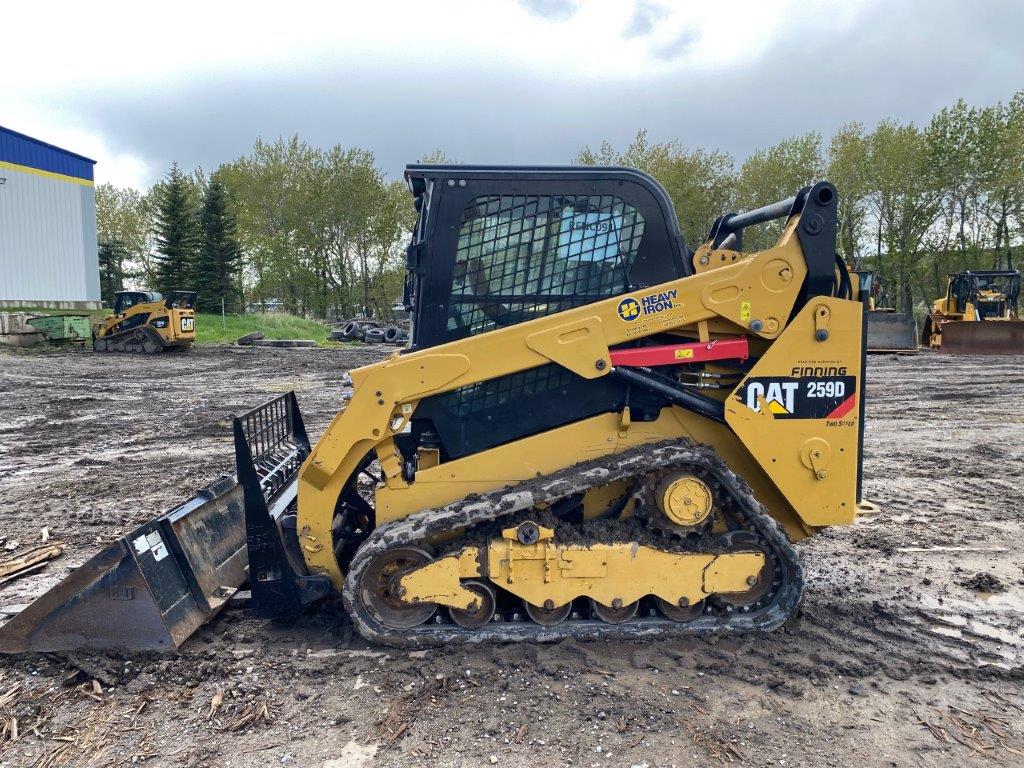
Walk into any active job site in Alberta, and there’s a good chance that a skid steer is already running. The reason is that skid steers are one of the most useful machines on construction sites, farms, and landscaping projects that contractors realize.
For Alberta contractors managing tight project budgets, shifting scopes, and sites that rarely cooperate exactly as planned, versatility is not a nice thing to have. It’s what determines whether one machine covers three tasks or whether you are paying to bring in three separate machines to do them. A skid steer changes that equation in a meaningful way.
This guide breaks down what genuinely makes skid steers the most adaptable machines on any job site, the range of work they handle, the attachment ecosystem that multiplies their capability, and when skid steer rentals in Alberta make more practical sense than committing to ownership.
What Makes a Skid Steer Loader So Versatile
Contractors who have worked with one long enough stop thinking of it as a single machine. That shift in perspective happens because of how the skid steer is built from the ground up. Here’s what makes a skid steer loader so versatile.
Compact size
A skid steer fits where other machines get turned away. Tight urban sites, indoor demolition work, residential properties, and congested areas that would stop a larger machine are all accessible. That access alone changes what is possible on a job.
Tight turning radius
Skid steers rotate within their own footprint by driving opposite sides at different speeds. Repositioning on a confined site takes seconds rather than the kind of drawn-out manoeuvring that quietly eats through a rental day.
Quick-attach system
Switching from a bucket to an auger to a hydraulic breaker takes minutes without additional tools or a second pair of hands. The attachment changes, the operator stays, and the job keeps moving.
Hydraulic power
Strong auxiliary hydraulics allow demanding attachments to perform consistently without the machine struggling to keep up. On jobs where output per hour directly affects project cost, that consistency is what separates a productive day from a frustrating one.
These four things working together are why skid steer rentals in Alberta stay in high demand across industries that have very little else in common.
10 Jobs a Single Skid Steer Can Handle
Most contractors bring a skid steer on site for one job and end up using it for three. It is what happens when a machine is genuinely built around adaptability rather than a single purpose.
While larger equipment sits idle between tasks, a skid steer keeps moving because there is almost always something on a job site it can be doing. Here is what a single machine is genuinely capable of handling.
- Material Handling: Moves bulk material across the site faster and more precisely than manual labour ever could.
- Grading: Levels and prepares ground on sites where bringing in a dedicated grader does not make financial sense.
- Demolition: Gets into confined structures and breaks down what needs to come out without disturbing what needs to stay.
- Trenching: Paired with a trencher attachment, it cuts clean lines for utilities and drainage work.
- Landscaping: Shapes, moves, and places material on residential and commercial properties with enough control to protect the surrounding area.
- Snow Removal: Keeps Alberta job sites and access roads clear through winter when downtime is not an option.
- Agriculture: Handles feeding, material movement, and yard cleanup across farm operations through every season.
- Road Maintenance: Fills potholes, clears debris, and handles surface prep on municipal and private road networks.
- Brush Clearing: Works through overgrown terrain and site vegetation before ground preparation can begin.
- Pallet Moving: With forks attached, it handles yard and warehouse logistics without needing a separate machine for the task.
The Attachments That Turn One Machine into Many
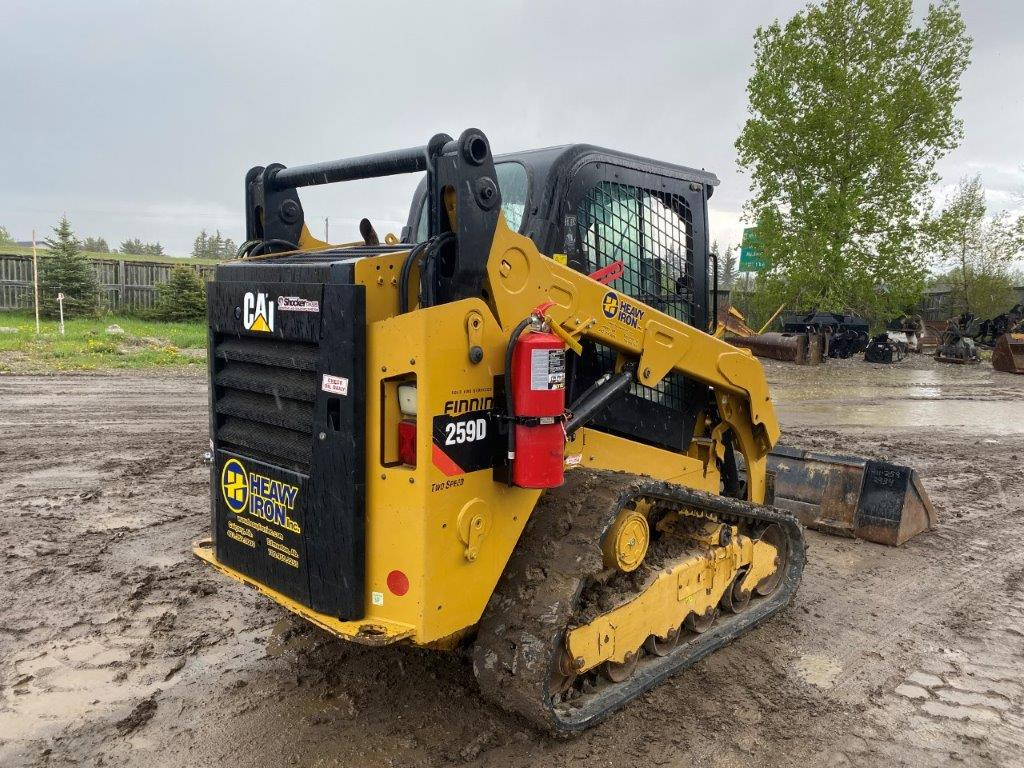
A skid steer without attachments is still a capable machine. With the right ones, it becomes an entirely different conversation. The attachment ecosystem is what separates a skid steer from every other compact machine in its class, and for contractors managing heavy equipment rentals in Alberta across multiple project types, it is often the deciding factor between bringing in one machine or three.
| Attachment | Primary Use | Best for |
|---|---|---|
| Buckets | Digging and moving loose material | Earthworks, site prep, material handling |
| Pallet Forks | Lifting and transporting palletized loads | Warehousing, agriculture, construction yards |
| Augers | Drilling precise holes into soil or rock | Foundation work, post setting, fencing |
| Grapples | Gripping and sorting irregular material | Demolition, logging, debris cleanup |
| Trenchers | Cutting clean trenches through ground | Utility installation, drainage, irrigation |
| Hydraulic Hammers | Breaking rock, concrete, and compacted ground | Demolition, road breaking, excavation prep |
| Snow Blowers and Blades | Clearing and moving snow efficiently | Municipal work, commercial properties, Alberta winters |
| Brush Cutters | Cutting through heavy vegetation and overgrowth | Land clearing, right-of-way maintenance, site prep |
The real value here is not any single attachment. It is the fact that one operator, one machine, and the right set of attachments can move through an entire project scope without waiting on additional equipment to arrive on site. For contractors keeping a close eye on mobilization costs and rental days, that matters more than most people initially account for.
Industries That Benefit Most from Skid Steers
No other compact machine gets pulled into as many different industries as a skid steer. The reason is simple: the work changes but the machine keeps up. From winter snow clearing on municipal roads to grading a residential backyard, the same unit handles it without hesitation. Here is where contractors and operators rely on them most.
Construction:
Sites change daily, and budgets do not stretch to a different machine for every task. A skid steer covers material movement, cleanup, and site prep without being swapped out between jobs.
Landscaping:
The work happens close to structures and in spaces larger machines damage or cannot reach. A skid steer gets in, does the job, and gets out without leaving a mess behind.
Agriculture:
Farm work is rarely the same twice and rarely stops. Feeding, yard cleanup, and material handling all fall within what a skid steer handles comfortably across every season.
Municipal:
Snow removal, debris clearing, and road maintenance keep crews busy year-round. A skid steer handles all of it without significant mobilization costs or specialized operators.
Property Maintenance:
Maintenance contractors juggle multiple properties and shifting priorities on the same day. A skid steer adapts to whatever the next job demands without any downtime in between.
Choosing the Right Skid Steer for Your Needs
Getting the right skid steer on site is not about picking the biggest machine available or the cheapest rental option. It is about matching the machine to what the job actually demands before it shows up.
Size and Weight Class
Smaller units work well on confined sites, residential projects, and indoor work where space is limited. Mid-size machines handle most commercial and civil applications comfortably. Larger units are for quarry work, land clearing, and high-volume material movement where a smaller machine would slow the job down.
Rated Operating Capacity
This determines how much the machine can safely lift and carry. Underestimating this on a job that involves heavy material movement creates both a safety problem and a productivity problem.
Lift Height
If loading trucks or working at height is part of the scope, a standard lift configuration may not reach where the job needs it to. High-flow models with vertical lift arms are worth specifying upfront rather than figuring out on-site.
Wheels vs. Tracks
Wheeled skid steers move faster on stable surfaces. Tracked machines handle soft ground, slopes, and uneven terrain without tearing up the surface underneath. Alberta job sites vary enough that this decision deserves more thought than it usually gets.
Hydraulic Flow
High-flow hydraulics are what demanding attachments – like cold planers and hydraulic hammers need to perform properly. Renting a machine without confirming hydraulic compatibility with your attachments is a mistake that costs time on day one.
Should You Buy or Rent a Skid Steer in Alberta?
This is a decision every contractor faces at some point, and the honest answer is that it depends entirely on how you work – not on what a dealer would prefer you to do.
Buying makes sense when:
- The machine is running consistently across multiple projects with little downtime between them
- You have the yard space, a reliable mechanic or service contract, and the cash flow to cover maintenance without it affecting project budgets
- Skid steer work is a core part of your operation, not an occasional requirement
Renting makes more sense when:
- The project is short-term, or the scope does not justify a long-term capital commitment
- You need a specific attachment configuration that your own machine cannot accommodate
- Storage between projects, scheduled servicing, and transportation to each new site all add costs that quietly eat into what looked like a straightforward ownership decision
- Your workload fluctuates seasonally, which means an owned machine can sit unused for months while the carrying costs keep running
The calculation is straightforward. Ownership builds equity, but it also builds obligation. Every service interval, every repair, and every month the machine sits between projects is a cost that does not show up in the purchase price.
For contractors who need reliable skid steer rentals in Alberta without the overhead of ownership, Heavy Iron Inc. carries a fleet of over 120 machines across multiple size classes, backed by over 20 years of experience putting the right equipment on the right job sites. For more information, you can browse our full inventory or contact our team.
Conclusion
A skid steer is not the most powerful machine on a job site. It is not the largest, and it does not dig the deepest. What it does is adapt faster than anything else in its class, switching between tasks, fitting into spaces other machines cannot, and keeping the job moving when conditions change mid-shift.
If you are looking at skid steer rentals in Alberta for an upcoming project or want to explore heavy metal equipment in Alberta across a broader fleet, Heavy Iron Inc. has been putting the right machines on Alberta job sites for over 20 years. With 120-plus machines available and a rental process built around getting contractors what they need without the runaround, the right place to start is heavyironinc.com.
Frequently Asked Questions (FAQs)
1. Can a skid steer handle both winter and summer work in Alberta?
Yes. The right attachments turn the same machine into a snow removal unit through winter and a grading or material handling machine through summer.
2. How long does it take to switch attachments on a skid steer?
Switching attachments on a skid steer typically takes 2 to 5 minutes for standard manual or hydraulic systems.
3. What size skid steer do I need for a residential landscaping project?
A compact unit in the 1,750 to 2,200 pound operating capacity range handles most residential work without damaging surrounding surfaces.
4. Is a skid steer hard to operate for someone new to heavy equipment?
It has one of the shorter learning curves in its class, but proper training before the machine goes on site still matters.
5. What should I check before accepting a rental skid steer on site?
Hydraulic function, attachment coupler condition, track or tire wear, and a cold start. Catching problems before the rental clock starts saves time and avoids disputes later.